So, your original blogger here apologizing for the fact that the blog has been LONG neglected.
It happens. I did try and avoid it becoming dormant by assigning it to someone else, but she too has a life that likes to get in the way. Yeah.... The unavoidable was bound to happen.
Anyhow, I'm not sure about updates for the other projects, but if I find out, I'll let you know. As for me, I've been working on my own on the side, and I do have some stuff to share. Not many construction pictures - actually, construction pictures are part of the reason I became too busy for the blog. Seemed like any time I started to sew, I'd end up kind of derailed because I had to stop and take pictures of what things were looking like and, it just REALLY added a lot of time to the construction. So instead of finishing in a timely manner, or what I thought was "on-time" in my mind, I was taking FOR EVER.
Well, for lack of better explanation, I guess it works for other bloggers, but not really me. So, instead I'll regale you with photos that were taken this week for the American Duchess "Winter Wonderland" Photo Contest.

The fashion, art, and culture of the Orientalist movement, and the peoples of South Asia, the Near, and the Middle East during the 19th century who inspired them.
Showing posts with label Persia. Show all posts
Showing posts with label Persia. Show all posts
Thursday, November 28, 2013

Tuesday, July 2, 2013
The Lady of Susa: Reconstructing the clothing of Achaemenid Persia (Part 4)
Today we dye!
Dye, not die.... Although if done improperly, I imagine one could accidentally do both.
I'll start off with the "big" dye project:
Saffron.

Yes, I'm going to dye with saffron. It is the only dye in this costume that I can do accurately (I'm hoping this doesn't bite me in the bottom later on) as true Tyrian purple is impossible for someone of my dyeing capabilities, and regular murex-dyed cloth is next to impossible.
So, without further ado, I present to you my attempt to dye with saffron the way my ancestors did.
Dye, not die.... Although if done improperly, I imagine one could accidentally do both.
I'll start off with the "big" dye project:
Saffron.

Saffron pickers via
Yes, I'm going to dye with saffron. It is the only dye in this costume that I can do accurately (I'm hoping this doesn't bite me in the bottom later on) as true Tyrian purple is impossible for someone of my dyeing capabilities, and regular murex-dyed cloth is next to impossible.
So, without further ado, I present to you my attempt to dye with saffron the way my ancestors did.
Monday, June 17, 2013
The Lady of Susa: Reconstructing the clothing of Achaemenid Persia (Part 3)
A simple veil is where we begin today..... Well, for now. You'll see what I mean later. :)
Veils, prior to Islam, were viewed in a very different context than now. They were not mandatory in Achaemenid Persia; rather, they were meant to be seen as a luxury item; something that a woman wore when leaving the privacy of the home to show her status as a lady, so free of obligations, that she could cloak herself in a garment that made it nearly impossible to do anything in.

Detail
from the Pazyryk Rug, a 2500 year old rug that is believed to be from
Achaemenid Persia, and certainly seems to back up that belief with these
wonderful depictions of Achaemenid women. Image found from the Web.Iran forum
Royal women viewed themselves as very private, as their common counterparts were so visible to the public. The ability to be able to simply withdraw oneself at one's own convenience was quite a luxury, mainly because it was so impractical.
This is also why in the Cyropaedia, Araspas the Mede gets a bit in over his head with our Lady of Susa... She retracted her general "veil of privacy" so to speak around him because she saw him as a close friend, and, well... How often did royal women really do that?
Judging by his reaction: not often, not often at all.
Wednesday, May 29, 2013
The Lady of Susa: Reconstructing the clothing of Achaemenid Persia (Part 2)
Our project starts with humble beginnings.

The foundation wear.
There's little historical sources on the undergarments of women of the era, but then again, there's few depictions of women. However, the one mention on the subject from the Encyclopaedia Iranica stated that, like their outerwear, it was very similar to their male counterparts, and by my own assumption possibly with a few adjustments to accommodate female support.
Friday, May 17, 2013
The Lady of Susa: Reconstructing the clothing of Achaemenid Persia (Part 1)
Today begins my first post, and consequently, project on this blog. I hope I can manage to not disappoint.
For those of you who don't know, our previous blogger/researcher/page manager is a bit busy with, well, life. That's how she put it anyhow, I'm not sure how much she wishes to tell, so I'll keep my mouth shut.
Anyhow, I'm going to start off things in a manner a bit, how do I say, overly ambitious.
Yes, that's how I'll describe this project.
As those of you who already follow our page may know, the Cyrus Cylinder is arriving in Los Angeles to be on view at the J. Paul Getty Museum this Autumn.
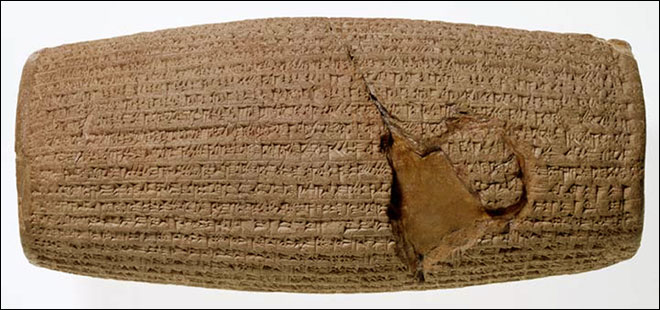
The Cyrus Cylinder, image via
Friday, March 22, 2013
Norooz 1392
The Persian New Year has come and passed.
Sorry, I wanted to write about it beforehand, but let's face it, that's like writing about Christmas during the Christmas season.... Just too hard to do from all the busy!
Anyhow, I intend to rectify the fact now by sharing some pictures and a little of what's been going on here.
Sorry, I wanted to write about it beforehand, but let's face it, that's like writing about Christmas during the Christmas season.... Just too hard to do from all the busy!
Anyhow, I intend to rectify the fact now by sharing some pictures and a little of what's been going on here.
 |
| Norooz in a Sassanian gown; this is from last year, at my cousin's house. |
Sunday, March 3, 2013
Mehndi Madness
Warning: This post does contain nudity. What can I say, Qajars loved ladies' adornments.
All the previous posts about Mughal India and dancing girls, and mehndi was completely overlooked.
So here's a little bit about mehndi, or as we call it in Iran, henna.

All the previous posts about Mughal India and dancing girls, and mehndi was completely overlooked.
So here's a little bit about mehndi, or as we call it in Iran, henna.

Image via... well, National Geographic... Says so right there.;)
Tuesday, December 18, 2012
Shab e Yalda 1391
If you've been following our Facebook page, you'll know we've been posting some (somewhat silly) videos of Christmas in the Middle East and South Asia. They've pretty much all featured a very silly interpretation of Santa Claus.
In a region of the world with a relatively low Christian population in comparison to the either Muslim, or in India's case Hindu, majority, it seems like this time of year, before the commercialization and consequent acceptance of Christmas, there wasn't much to do. (Yes, I know there's Chanukah, but that actually still is a very religious holiday that non-Jews have not adopted, and given the current strain in the region, they probably won't adopt any time soon.)
Well, for Persians though, we do have a tradition that's close to Christmas.
Shab e Yalda, also known just as "Yalda" is this Friday. It's caused some delays here in terms of sewing, but it's also given a few things to post about in lieu of the lack of sewing.
Yalda tradition extends back thousands of years as a celebration of the beginning of the end of the "darkest" days; essentially, it's celebrated on the day with the shortest daylight hours to welcome back the longer days that will be arriving. Despite being something that has been around so long, like Christmas, it really comes into it's "modern" version in the 19th century.

Image of a very simple korsi with family gathered around it by Antoin Sevruguin (gotta love this guy for all his photos!) via
Sunday, November 4, 2012
Movember and the Qajar Mustachio Project
It's November now, and before I go on to post the updates for the Entari, I figured I'd take a little time to talk about Movember - November's alter-ego designed to raise awareness of men's prostate health by growing fantastic mustaches - as mustaches were quite prevalent during not only the entire Middle East and South Asia, but it seems the entire world during the 19th century.


Mangal Pandey, famous Indian freedom fighter,. Image via Parda Phash
Wednesday, October 24, 2012
Gol Duzi (A Constructive Break from the Entari)
It's been silent far too long here. It's very hard to keep updates on costumes that, well, aren't moving along so fast or are just filled with boring tasks.
The entari has been giving me some trouble. I just have no desire to work on it right now. It's very tedious in a sense because it's very repetitive, but not in a way you can easily "lose" yourself in.
So I'd like to share with you another project that I've undertaken in preparation for some of the other articles of clothing I will be working on later. It's an ancient form of art from Iran, dating back thousands of years, called gol duzi. I believe in English, it may sometimes be called "Rasht work" after the city of Rasht that uses gol duzi to attach felt appliques to garments.

Detail from a panel from Rasht, Gilan, Iran, here
Subscribe to:
Posts (Atom)